

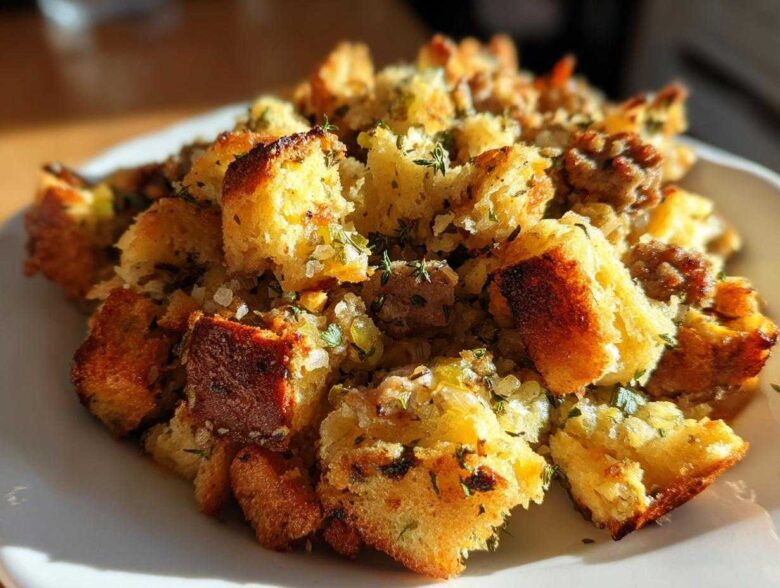
Listen, when the calendar flips to November—or let’s be honest, even October—the whole kitchen starts buzzing about the bird, but I’m here to tell you the real star of Thanksgiving is always the side dish you actually eat seconds of: the stuffing! Forget those dry, flavorless cubes hiding under the turkey skin. I’ve cracked the code to the Best Stuffing Recipe Ever, and believe me, this is my Grandma Approved Stuffing. We’re making a killer stuffing featuring savory pork sausage and tons of fresh, earthy herbs. It’s so good, people actually ask for the recipe before they ask for seconds.
This specific sausage and herb combination—trust me on this—is what separates the amateurs from the holiday pros. We’re aiming for moist perfection inside and that slightly chewy, crispy edge when baked in a dish. Ready to make the best batch of stuffing of your life? I’ve linked over to my About Us page where I talk more about my journey perfecting holiday sides!
Why This Classic Homemade Stuffing Recipe Stands Out
When you’re trying to nail that “comfort food” vibe, you need texture that sings, right? This recipe isn’t just another bowl of soggy bread; it’s designed to deliver that magic combination people dream about all year. The structure is what sets this Savory Herb Stuffing apart from everything else your aunt might be bringing to the table.
Achieving the Perfect Moist and Crispy Stuffing Texture
The secret sauce for that perfect bite—juicy in the middle but crunchy on top—really comes down to hydration. If your bread cubes aren’t dried out properly, they just soak up all the broth and turn to mush. We use day-old or dried bread because it’s thirsty—it grabs just enough liquid to create that soft interior without collapsing.
Flavor Depth in Our Sausage Stuffing Ideas
Honestly, most recipes skip over the foundation of flavor. But with our Sausage Stuffing Ideas, we brown the pork sausage first and use that rendered fat to cook our veggies. That means every single onion and celery piece is deeply flavored before it even meets the bread. That layer of savory richness elevates this entire stuffing from good to absolutely essential at the holiday table. That’s how you do it!
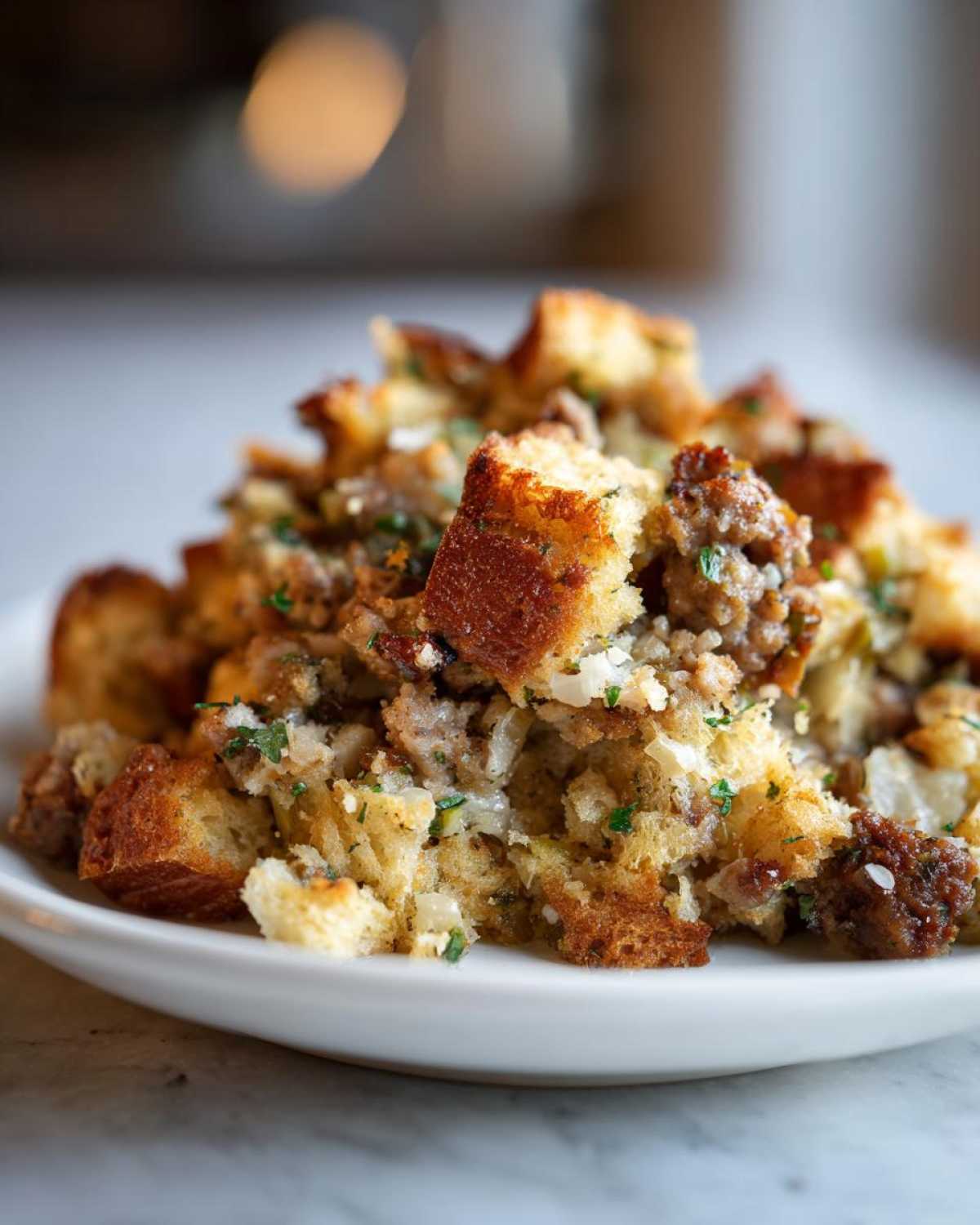
Ingredients for the Best Stuffing Recipe Ever
Okay, assembling this incredible Traditional Bread Stuffing is almost as fun as eating it! The quality of these few ingredients makes all the difference. Don’t try to sneak in any shortcuts here—the results speak for themselves when the oven bell rings. We keep the list simple, but every single item has a job to do in building that incredible flavor profile.
- 1 pound bulk pork sausage (Make sure it’s good quality!)
- 1 cup unsalted butter (Yes, a full cup! It’s the holidays!)
- 2 large yellow onions, chopped (Chop them medium, we want texture)
- 4 celery stalks, chopped (Don’t skip the celery; it adds that essential sweet crunch)
- 1 tablespoon dried sage (This is the main herb, don’t be shy!)
- 1 teaspoon dried thyme
- 1 teaspoon dried rosemary
- 1 teaspoon salt
- 1/2 teaspoon black pepper
- 12 cups dried bread cubes (About one standard loaf’s worth—day-old is best!)
- 2 cups chicken broth (Low sodium is usually safer so you control the salt)
- 2 large eggs, lightly beaten (These help bind everything together once baked)
How to Prepare This Traditional Bread Stuffing
Getting this Traditional Bread Stuffing ready is straightforward, but timing is everything when you want that ultimate texture. Don’t rush the sausage browning, and definitely don’t overmix the bread once the liquid hits it. If you follow these steps, you’ll have a No Fail Stuffing Recipe every single time, and I even threw in a link to our terms so you know we’re serious about clean cooking! Check out the Terms and Conditions if you’re curious about how we operate!
First things first: set your oven temperature to 350 degrees F and get that 9×13 inch baking dish good and greased up. We aren’t messing around with sticking here!
Sautéing Aromatics and Browning the Sausage
We start hot! Grab a big skillet and get that sausage cooking over medium heat. You want it fully browned, broken up nicely so no big chunks remain. Drain off most of that delicious rendered grease—we want flavor, not sloppiness. Then, right in that same pan, melt down your cup of butter. Toss in the chopped onions and celery. Let those cook away until they are soft and sweet, which usually takes about 8 minutes. Stir in all those lovely dried herbs—sage, thyme, and rosemary—plus your salt and pepper. Cook them just until you can really smell those spices waking up, maybe a minute more.
Combining Wet and Dry Ingredients for Perfect Stuffing
Now for the assembly! In your absolute largest bowl, combine the dried bread cubes, the cooked sausage, and your sautéed veggies. Give that a gentle toss. Whisk the chicken broth and eggs together separately, then pour that liquid over the bread mixture. This is the critical moment for any stuffing: toss lightly! We just want everything evenly moistened. If you beat it up, you destroy the structure, and that’s how you get soup instead of actual stuffing.
Once everything is just combined, move that glorious mixture right into your prepared baking dish. See? Easy peasy!
Tips for Success with Your Homemade Stuffing Recipe
Getting this right year after year takes a little planning, and I’ve learned a few tricks over the years to make sure this stuffing is always a showstopper. If you’re worried about timing everything on the big day, don’t stress! We can totally lean into those Make Ahead Stuffing Tips; this recipe is perfect for prepping in advance.
First, I mentioned using dried bread, but let me stress this: Day-old bread is actually better than fresh bread. If your cubes are too fresh, they will absorb too much liquid during the overnight chill, leading to a gummy final product. If you only have fresh bread, just spread the cubes on a baking sheet and bake them at 250 degrees for about 15 minutes until they feel stiff, not toasted.
When it comes to baking, you control the crust! If you want maximum crunch—that beautiful gold-brown top—bake it completely uncovered. But, if you prefer your stuffing incredibly soft and tender all the way through, cover that pan tightly with foil for the first 30 minutes. This steams the inside just right. If you let me know what your preferred texture is, remember you can always review our privacy policy for how we handle your comments!
Variations on this Savory Herb Stuffing
While I think this sausage and herb combination is genuinely the gold standard for stuffing, I know everyone has different tastes, especially when it comes to holiday spreads! It’s fun to mix things up without totally losing the savory base we built here. If you’re looking for something bright to cut through the richness of the rest of the meal, you absolutely must try making a Cranberry Apple Stuffing next year.
To do that, I just omit the sausage completely and add about one cup of tart Granny Smith apples, diced small, along with half a cup of dried cranberries that have soaked in a little orange juice beforehand. That bright sweetness pairs unbelievably well with the sage and rosemary. Alternatively, if you’re hosting vegetarians, just skip the sausage in the main recipe and sauté some mushrooms or toasted pecans in the reserved sausage fat for incredible depth!
Turning Leftover Stuffing into Stuffing Balls Appetizer
Okay, but what about the next day? Leftover stuffing is a gift, but sometimes just reheating it in the microwave feels sad. Instead, pack the leftover baked mixture tightly into small balls—about one inch across. Give them a quick brush of melted butter, and pop them back into a 375-degree oven for about 15 minutes. They heat through perfectly and get that amazing crust again! It instantly transforms your leftovers into the fanciest little Stuffing Balls Appetizer you’ve ever served. No one will ever guess it’s just the day-after batch!
Storage and Reheating Instructions for Holiday Stuffing Recipes
Once you’ve successfully created the most perfect stuffing ever, you need to know how to treat those leftovers right! Since this is a substantial side dish, you’ll almost certainly have some remaining. For safety, make sure any leftover stuffing—whether baked or the unbaked mixture—is refrigerated within two hours of coming out of the oven or sitting on the buffet, and it should be eaten within three to four days. This is key for any successful Holiday Stuffing Recipes planning!
When you reheat the baked version, add a splash of broth or even just a tablespoon of water to the dish before covering it tightly with foil. Pop it in a 350-degree oven until piping hot all the way through. If you’re reheating the unbaked mixture from the fridge, add about a quarter cup more broth than the original recipe called for, since some moisture is lost during the chilling time. Check out our disclaimer if you have any concerns about food safety timelines!
Frequently Asked Questions About Making Perfect Stuffing
I know you’ve been following along, but sometimes those little lingering questions pop up right when you need to get dinner on the table! Cooking is full of judgment calls, and I’ve answered the top worries I always hear about making this Classic Thanksgiving Stuffing so you can feel totally confident.
Can I use this as stuffing for turkey?
This is the eternal question! Technically, yes, you *can* use this as homemade stuffing for turkey, but I strongly advise against it, and here’s why. When you cook it inside the bird, the center of the stuffing rarely hits the safe temperature without the turkey breasts getting way too dry. Also, cooking inside slows the cooking process for the turkey overall. I always bake mine separately in a casserole dish for that amazing crispy top layer. It cooks faster and tastes way better, hands down!
What is the best bread for this stuffing?
Please, please use dried bread! If you use fresh bread straight from the bag, it’s going to absorb too much liquid and end up gummy, no matter how much sausage or butter you add. Day-old bread cubed and left on a baking sheet overnight is perfect. If you are in a massive rush, you can toast fresh cubes lightly in the oven until they feel stiff and dry to the touch—that creates the necessary structure for a great, fluffy final stuffing.
Another common worry I get is about the herbs. Since we use dried herbs here, you absolutely don’t need to substitute with fresh ones unless you really want to. If you do swap them out, just remember that fresh herbs are much stronger, so use about triple the amount of dried called for in the recipe, and add them later in the sautéing process so they don’t burn!
Nutritional Estimates for This Comfort Food Side Dishes
Look, I’m not going to lie to you; with all that butter, sausage, and bread, this isn’t exactly a light salad. But hey, this is your Comfort Food Side Dishes moment, and you deserve every delicious bite! We need to keep track of things, even when baking up the best holiday sides. Please remember that these numbers are just estimates based on the specific ingredients listed in our recipe above.
These figures are for one cup serving, which is a generous pile, but you know how it goes when you’re passing the dish around the table. Feel free to check out our cookie policy to see how we handle data around the site!
- Calories: Approximately 350
- Total Fat: Around 22g (Remember that’s where a lot of that signature flavor lives!)
- Total Carbohydrates: About 28g
- Protein: Near 12g
- Sugar: Keeps low at about 3g
- Sodium: Roughly 550mg (This can vary a lot depending on your sausage choice)
If you are watching your sodium or fat intake, I always suggest using a leaner ground chicken or turkey sausage instead of pork—it cuts the fat down considerably while still giving you that essential savory umami flavor profile we love!
Share Your Classic Thanksgiving Stuffing Success
Now that you’ve got all my secrets for making the most amazing, savory, fall-off-the-bone Classic Thanksgiving Stuffing, I really, truly want to hear about it!
Seriously, seeing your holiday tables and hearing how this recipe went over with your family is the whole reason I bother testing things until my kitchen smells like a spice market for a week straight. Did you stick with the sausage? Did you use fresh sage?
Don’t be shy! Head down to the comments section right now. Give this recipe a five-star rating if it brought joy (and lots of delicious leftovers) to your table. Drop a comment telling me your favorite part about this stuffing!
And please, if you snapped a picture of your golden, crispy masterpiece, share it on social media and tag me! I adore seeing how my recipes fit into your traditions. Tagging me lets me share your success story with the whole community. If you have any burning questions or just want to say thanks, you can always reach out directly on our Contact Us page!
PrintClassic Homemade Sausage and Herb Stuffing
A traditional recipe for moist, savory bread stuffing featuring sausage and fresh herbs, perfect for holiday meals.
- Prep Time: 20 min
- Cook Time: 50 min
- Total Time: 1 hour 10 min
- Yield: 10 servings
- Category: Side Dish
- Method: Baking
- Cuisine: American
- Diet: Vegetarian
Ingredients
- 1 pound bulk pork sausage
- 1 cup unsalted butter
- 2 large yellow onions, chopped
- 4 celery stalks, chopped
- 1 tablespoon dried sage
- 1 teaspoon dried thyme
- 1 teaspoon dried rosemary
- 1 teaspoon salt
- 1/2 teaspoon black pepper
- 12 cups dried bread cubes (about 1 loaf)
- 2 cups chicken broth
- 2 large eggs, lightly beaten
Instructions
- Preheat your oven to 350 degrees F. Grease a 9×13 inch baking dish.
- In a large skillet over medium heat, cook the sausage, breaking it apart, until browned. Drain off excess grease and set the sausage aside.
- In the same skillet, melt the butter. Add the onions and celery and cook until softened, about 8 minutes.
- Stir in the sage, thyme, rosemary, salt, and pepper. Cook for 1 minute until fragrant.
- In a very large bowl, combine the dried bread cubes, cooked sausage, and the sautéed vegetable mixture. Toss gently to combine.
- In a separate bowl, whisk together the chicken broth and eggs. Pour this mixture over the bread mixture. Toss lightly until the bread is evenly moistened. Do not overmix.
- Transfer the stuffing mixture to the prepared baking dish.
- Bake for 40 to 50 minutes, or until the top is golden brown and the center is heated through.
Notes
- For crispier stuffing, bake uncovered. For moister stuffing, cover the dish with foil for the first 30 minutes of baking.
- You can prepare the mixture a day ahead and refrigerate it before baking. Add 1/4 cup more broth if baking directly from the refrigerator.
- Use day-old or dried bread cubes for the best texture.
Nutrition
- Serving Size: 1 cup
- Calories: 350
- Sugar: 3
- Sodium: 550
- Fat: 22
- Saturated Fat: 8
- Unsaturated Fat: 14
- Trans Fat: 0
- Carbohydrates: 28
- Fiber: 2
- Protein: 12
- Cholesterol: 75