

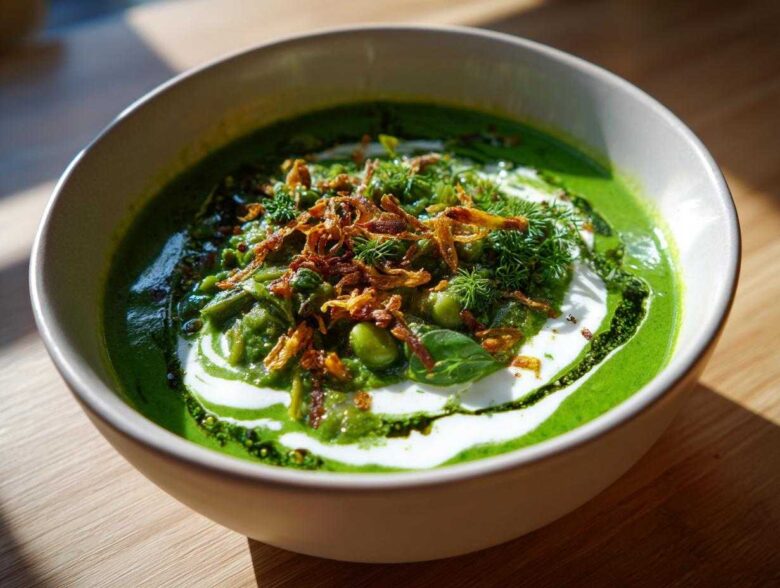
Oh, if you’re looking for that kind of hug-in-a-bowl feeling, stop searching right now. Nothing beats the deeply satisfying, earthy warmth of a truly authentic Persian noodle soup. I’m not talking about just any soup here; I mean proper Ash Reshteh. This isn’t a quick weeknight fix, but when I bring out my massive pot of this, usually for family birthdays or when the weather gets truly gloomy, you can feel the mood lift immediately.
I learned the secrets to that savory herb complexity from my aunt, who insists her recipe has been passed down for generations. Trust me, getting the balance right between those hearty legumes and the fresh greens is tricky, but once you master this recipe, you will have the best Ash Reshteh on the block. It’s vibrant, it’s packed with texture, and it just feels like home.
Honestly, making real Ash Reshteh is an act of love. Stick with me, and I’ll show you how we make this traditional dish accessible for your own kitchen. You can check out a little more about my cooking philosophy over on my About Me page if you’re curious!
Why This Ash Reshteh is the Ultimate Persian Noodle Soup Recipe
So why do I keep making this version year after year? Because it nails that perfect blend that defines Traditional Persian Comfort Food without being overly complicated. It’s hearty, it’s soulful, and it just smells incredible while it’s simmering away.
- Unreal depth from a huge quantity of fresh herbs.
- That satisfying, thick texture you only get from slow-simmered legumes.
- It truly is the best Hearty Herb Soup you’ll ever make. You just can’t beat the authenticity.
Key Features of Our Persian Noodle Soup Recipe
The real magic here is in the balance. We load it with greens, but we don’t rush the lentils and beans. The long, slow simmer pulls all those earthy flavors out. Then, just when you think it can’t get any better, we toss in those chewy noodles near the end. It keeps the broth rich and savory rather than muddy. It’s how my family always made it, and it just tastes right.
Gathering Ingredients for Authentic Persian Noodle Soup
Okay, now for the fun part: shopping! For this Ash Reshteh to taste right, we need to be serious about our greens and our specific noodles. Seriously, don’t substitute the noodles if you can help it—they make such a difference in the texture. I always try to get the freshest bunch of herbs I can find because that’s where about 80% of the flavor comes from anyway.
Essential Legumes and Noodles for Your Persian Noodle Soup
We are packing this soup with goodness, so you’ll need a trio of soaked legumes. Yes, you have to plan ahead! Make sure you soak your 1 cup dried chickpeas and 1 cup dried kidney beans overnight, or this soup will take basically forever. Lentils don’t need soaking, thankfully—just 1 cup of those dried beauties.
For the noodles, we absolutely need the thin, flat kind, traditionally called *reshteh*. If you’re hunting for the Reshteh Noodles Recipe specialty, look in international markets. If you absolutely can’t find them, grab the very thinnest egg noodles you can find, but know it won’t be exactly the same chewiness.
Herb Mixture: The Soul of This Hearty Herb Soup
This is non-negotiable: fresh wins every single time. You’ll want 1 cup chopped fresh parsley, 1 cup chopped fresh cilantro, 1 cup chopped fresh dill, and 1 cup chopped fresh spinach. Don’t forget the 1 cup chopped fresh scallions—the green parts only, please! I always wash these herbs in a big bowl of cold water and swish them around gently. Then, make sure they are *bone dry* before chopping. Soggy herbs steam instead of frying slightly when they hit the pot, and we want maximum flavor infusion in our persian noodle soup.
Toppings: Completing Your Traditional Persian Comfort Food
You can’t serve it naked! The toppings are essential for that authentic finish. You absolutely need plain yogurt or, if you’re feeling ambitious, kashk—which is a tangy, salty whey concentrate. Then you need to make yourself some quick fried onions (*piaz dagh*) and the final drizzle of fried dried mint oil (*nana dagh*). These three things cut through the richness perfectly!
Step-by-Step Guide to Making the Best Persian Noodle Soup
Alright, let’s get serious about cooking this magnificent soup! This recipe might seem long because we’re doing things the traditional way—which means proper depth of flavor—but trust me, it’s mostly hands-off simmering. We are aiming for a wonderfully thick, almost stew-like texture that makes this a true One Pot Persian Soup feast. Don’t worry about perfection on your first go; just follow the steps, and you’ll be fine. If you ever have questions about the process, make sure to check out the site disclaimer information.
Preparing the Legumes for Your Persian Noodle Soup
First things first: remember those beans and chickpeas you soaked overnight? Drain and rinse them thoroughly. Get them into your biggest pot with the lentils and cover everything nicely with fresh water. Bring that up to a rolling boil, then immediately drop the heat down low so it just bubbles gently. That initial cook needs about 45 minutes until they are just starting to get soft, but not mushy yet. Once they are ready, drain off that cooking water before moving them to the main soup pot. We want to keep our main broth clean!
Building the Flavor Base of the Authentic Persian Soup
Now, grab your main soup pot—the bigger the better!—and warm up two tablespoons of olive oil over medium heat. Toss in your large chopped onion and let it soften up and get happy for about five minutes. Then, you MUST add the minced garlic and the turmeric powder. Cook them just for one minute until you can really smell that amazing aroma—that’s the base flavor waking up! Once that smells good, go ahead and add the partially cooked legumes back in, along with the 6 cups of vegetable broth, salt, and pepper. Bring it all up to a simmer now.
Adding Herbs and Noodles to the Persian Noodle Soup
This is where the color and soul explode into the pot! Once it’s gently simmering, dump in ALL those gorgeous chopped greens—parsley, cilantro, dill, spinach, and scallions. Give it a really good stir to convince them to wilt down. Cover it and let that gentle simmer continue for about 30 minutes so those herbs really marry the beans. Finally, break up your 8 ounces of Reshteh Noodles Recipe noodles (or thin egg noodles) and toss them in. Stir often now, seriously often, because those noodles love to stick to the bottom. Cook according to the noodle package, usually about 10 to 15 minutes, until they are perfectly tender. Taste it, adjust salt if it needs it, and you’re done!
Expert Tips for Perfecting Your Ash Reshteh (Persian Noodle Soup)
You’ve got the steps down, but let me share a couple of pearls of wisdom I picked up the hard way so you don’t end up with a soup disaster! The biggest rookie mistake people make is adding the herbs too early or choosing the wrong noodles, which ruins the texture of the persian noodle soup. I once added dried herbs instead of fresh because I was rushing—the flavor was flat, and it tasted more like dried Italian seasoning than real Ash Reshteh. Never again!
If your soup seems way too thick when the noodles are done, don’t panic! I just add a bit of hot water, ladle by ladle, and stir until it loosens up to that perfect, cozy consistency. It’s much easier to thin it out than it is to try and un-mush your beans.
Ingredient Substitutions for this Savory Herb Noodle Dish
Okay, about substitutions. If you absolutely cannot find kashk for topping (it can be pricey!), just use thick, full-fat plain yogurt mixed with a tiny pinch of salt. It gives you that necessary tanginess to cut through the earthiness. For the herbs, I cannot stress this enough: use fresh! But if you must use dried mint (for the *nana dagh*), remember that dried herbs are way more potent. Use about one-third the amount of dried herbs you would use fresh to keep that signature intense green flavor in your persian noodle soup.
Serving and Storing Your Comforting Winter Soup
This is the grand finale! Ladling out your Persian noodle soup is almost as fun as making it. Make sure you get a good mix of broth, beans, and herbs in every bowl. Then comes the layering: swirl on that creamy yogurt or kashk first. Next, sprinkle generous pinches of the fried onions (*piaz dagh*) right over the top, making sure you get some crunch in there. Finally, drizzle just a tiny bit of that fragrant fried mint oil (*nana dagh*).
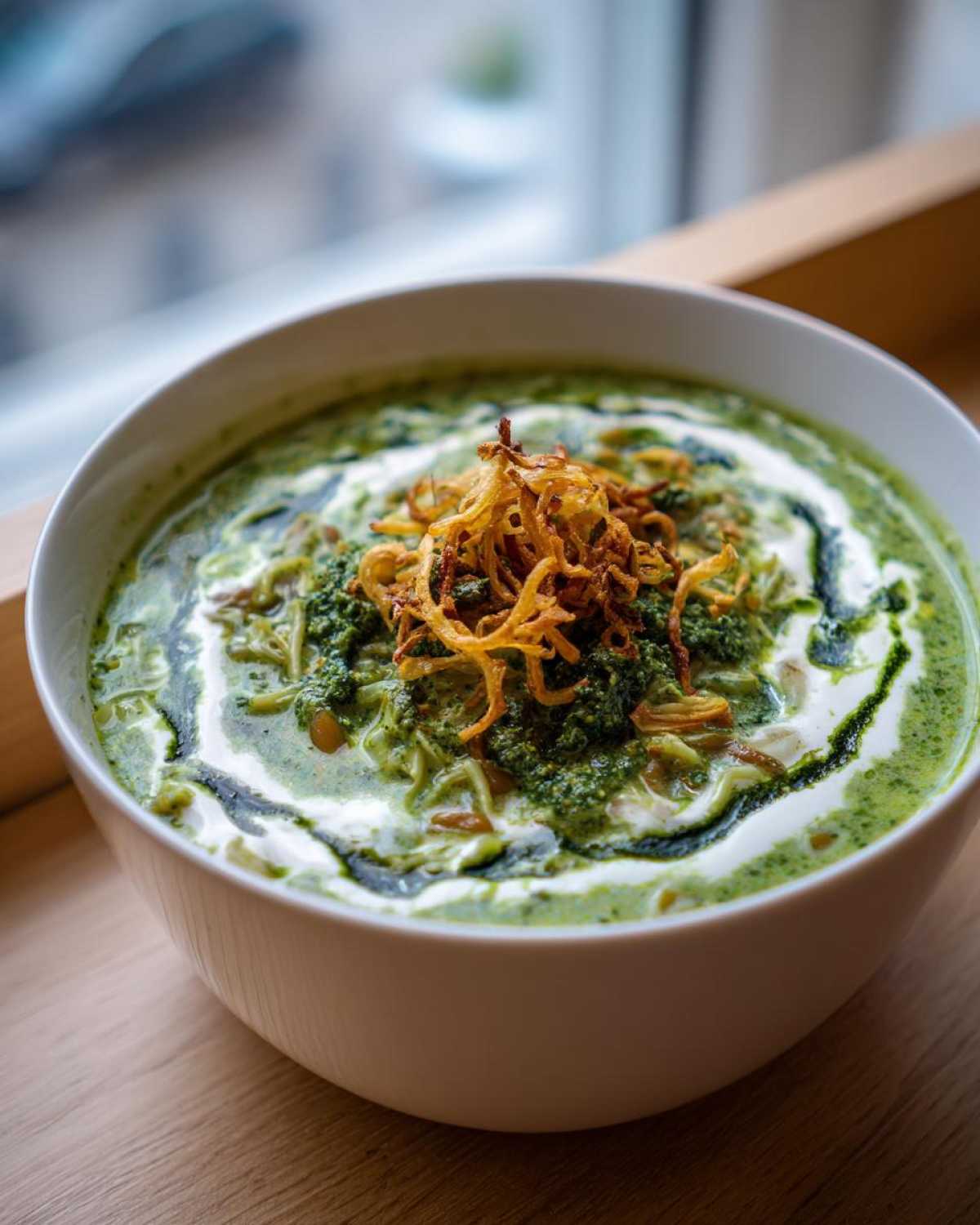
Here’s a secret tip: this persian noodle soup is actually even better the next day! The noodles absorb a little more broth, and the flavors just settle deeper. When you reheat it, just add a splash of hot water to loosen it up again, but keep those crispy toppings off until you serve it fresh!
Dietary Adaptations for This Vegetarian Persian Soup
One of the best things about Ash Reshteh is just how naturally vegetarian it is! If you look at the main ingredients—all those amazing legumes and mountains of fresh herbs—it’s already a vegetarian superstar. We use vegetable broth, so we’re golden there. The only real tricky spot where we need to pay attention is right at the end with the toppings. That traditional, tangy topping, kashk, is dairy, obviously. And if you’re using yogurt, that’s dairy too.
But don’t worry if you need to make this a fully vegan comfort meal! To replace the richness and tang of the kashk or yogurt, you have a couple of really great options. You can buy vegan sour cream, which blends beautifully and has that necessary sour punch. Or, my favorite trick for consistency is to make a cashew cream. Just soak some raw cashews for an hour, blend them until super smooth with a tiny bit of water and a squeeze of lemon juice. It has that wonderful body that mimics the texture perfectly when you drizzle it on top of your Hearty Herb Soup!
The fried onions and the mint oil? Those are vegan all the way, so no fussing there. Keep using olive oil for frying the mint, and you have a completely plant-based, ultra-satisfying bowl of traditional flavor. It’s so easy to adapt, which is why this recipe is such a reliable one for large, mixed gatherings.
Context: The Significance of Persian Noodle Soup During Nowruz Recipes
You can’t talk about making Ash Reshteh without talking about *Nowruz*, the Persian New Year! This soup isn’t just delicious; it’s deeply traditional. We pull out the big pot because it’s meant to symbolize abundance and new beginnings for the year ahead. All those herbs in the persian noodle soup represent growth and the vibrant spring that’s just starting.
It’s heavy, wholesome, and absolutely sets the tone for the whole holiday celebration. It shows up on tables across Iran to welcome the new season. Seeing those greens in the pot always reminds me that winter is finally over!
Frequently Asked Questions About Ash Reshteh (Persian Noodle Soup)
I know you probably have a few lingering bits of curiosity, because I certainly did when I first started making this! There are always shortcuts people look for, or fears about specific ingredients. Let’s knock out the last few questions so you can get cooking that persian noodle soup!
Can I make this Persian Noodle Soup Recipe in a Slow Cooker?
Oh, absolutely you can! If you own a slow cooker, it’s a wonderful way to handle all that long simmering time for the beans. The important thing to remember is timing. Soak those chickpeas and beans overnight just like the recipe says! Put them in the slow cooker with your broth and turmeric first thing in the morning. Go ahead and let them cook on low for about 6 hours until they are tender.
Here’s the crucial part where you can’t use a lazy approach: Once the beans are tender, you need to transfer the soup base (beans and broth) to the stove to finish. You never want to put the fresh herbs and the delicate reshteh noodles in the slow cooker for the whole run. Add the herbs for the last 30 minutes of cooking on the stove, and the noodles for the final 15 minutes. Otherwise, you’ll just end up with mushy green sludge and broken noodles in your Traditional Persian Comfort Food.
How long does it take to prepare the Easy Ash Reshteh Recipe?
When I call this an Easy Ash Reshteh Recipe variation, I’m focusing on the *active* time being low! The total time is about two hours fifteen minutes, according to the card, but you have to factor in the overnight soak for the beans. Realistically, your hands-on time is only about 30 minutes for all the chopping and initial sautéing. The rest of that time is just simmering, which is when you can go put your feet up or catch up on chores!
If you skip soaking the beans, you will easily add an extra hour or more of hard boiling time to the stove, so trust me on the overnight soak—it makes this ancient dish feel much more accessible. When you’re serving this Lentil and Noodle Soup, you want to be enjoying it, not scrambling!
If you have any other burning questions about technique or ingredients, feel free to reach out on my Contact page!
Understanding the Nutrition in Your Homemade Persian Stew
Because this persian noodle soup is so loaded with beans, lentils, and tons of fresh herbs, it’s surprisingly good for you! We’re looking at a bowl that’s heavy on fiber and protein, which is why it keeps you full for ages. Remember, these numbers are just estimates based on the recipe card, so expect some variation depending on how heavy-handed you are with the toppings like that creamy kashk.
If you want the full breakdown, you can always review the full nutritional page here. But generally, it’s way better nourishment than any take-out soup you could grab!
Share Your Experience Making This Persian Noodle Soup
Seriously, I want to know how this turned out for you! Making Ash Reshteh is a bit of a journey, and I’m always thrilled when someone manages to capture that authentic, earthy taste in their own kitchen.
When you finish ladling out your masterpiece, make sure you hop back down here and leave a quick star rating! Did you manage to find the real reshteh noodles, or did you use a substitute? Did you make it vegan or use a special topping variation? I love hearing how you tweak these Traditional Persian Comfort Food recipes to fit your week!
If you snapped a picture of your beautifully garnished bowl, tag me on Instagram! Seeing that vibrant green of the herbs topped with creamy goodness always makes my day. I might just feature your beautiful persian noodle soup creation on the blog!
Don’t be shy—tell me everything! Your feedback really helps other cooks trying this for the first time.
PrintAsh Reshteh (Hearty Persian Noodle and Herb Soup)

Prepare an authentic and comforting bowl of Ash Reshteh, a traditional Persian noodle soup packed with fresh herbs, legumes, and savory flavor, often served during Nowruz.
- Prep Time: 30 min
- Cook Time: 1 hour 45 min
- Total Time: 2 hours 15 min
- Yield: 6 servings
- Category: Soup
- Method: Stovetop Simmering
- Cuisine: Persian
- Diet: Vegetarian
Ingredients
- 1 cup dried chickpeas, soaked overnight
- 1 cup dried kidney beans, soaked overnight
- 1 cup dried lentils
- 1 large onion, chopped
- 4 cloves garlic, minced
- 1 cup chopped fresh parsley
- 1 cup chopped fresh cilantro
- 1 cup chopped fresh dill
- 1 cup chopped fresh spinach
- 1 cup chopped fresh scallions (green parts only)
- 6 cups vegetable broth
- 1 teaspoon turmeric powder
- 1/2 teaspoon dried mint
- 8 ounces reshteh noodles (or thin egg noodles)
- Salt and black pepper to taste
- 2 tablespoons olive oil
- For topping: 1/2 cup plain yogurt or kashk (whey concentrate)
- For topping: 2 tablespoons fried onions (piaz dagh)
- For topping: 1 tablespoon dried mint fried in oil (nana dagh)
Instructions
- Drain and rinse the soaked chickpeas and beans. Place them in a large pot with the lentils and cover with fresh water. Bring to a boil, then reduce heat and simmer for 45 minutes, or until partially tender. Drain the legumes and set aside.
- In a separate large soup pot, heat the olive oil over medium heat. Add the chopped onion and cook until soft, about 5 minutes. Add the minced garlic and turmeric, cooking for 1 minute until fragrant.
- Add the partially cooked legumes, vegetable broth, salt, and pepper to the pot. Bring the mixture to a simmer.
- Add all the fresh herbs (parsley, cilantro, dill, spinach, scallions) and the dried mint to the soup. Stir well. Cover and cook for 30 minutes, allowing the herbs to wilt and flavors to meld.
- Add the reshteh noodles to the soup. Cook according to package directions, usually about 10-15 minutes, until the noodles are tender. Stir occasionally to prevent sticking.
- Taste the soup and adjust salt and pepper as needed. If the soup is too thick, add a little hot water.
- Ladle the Ash Reshteh into bowls. Top each serving with a swirl of yogurt or kashk, a sprinkle of fried onions, and a drizzle of the fried dried mint oil.
Notes
- Soaking the chickpeas and beans overnight significantly reduces cooking time. If you skip soaking, you must cook them separately until tender before adding them to the main soup pot.
- You can substitute dried herbs for fresh if necessary, but use about one-third the amount of fresh herbs listed.
- For a vegetarian version, use vegetable broth. For a vegan version, omit the yogurt/kashk topping or use a vegan sour cream substitute.
Nutrition
- Serving Size: 1 bowl
- Calories: 450
- Sugar: 8
- Sodium: 550
- Fat: 12
- Saturated Fat: 2
- Unsaturated Fat: 10
- Trans Fat: 0
- Carbohydrates: 70
- Fiber: 15
- Protein: 22
- Cholesterol: 5